Endocrinology Billing: CGM Codes 95249 to 95251, Thyroid FNA, and Insulin Pump Billing in 2026
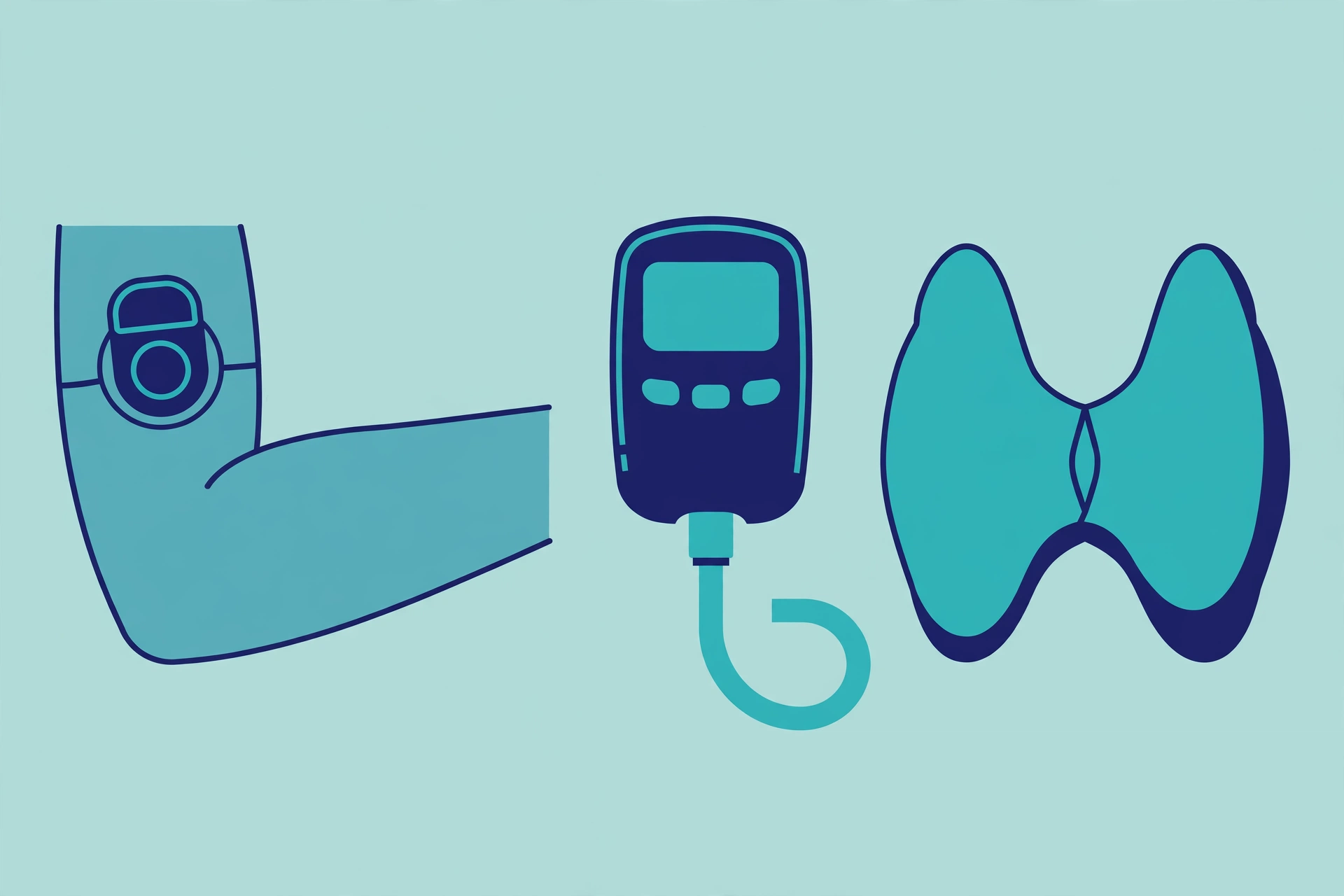
THE SHORT ANSWER
Endocrinology billing fails in a different way from most specialties. The clinical work is usually correct. The claim fails because the wrong billing path was chosen for a device, or because two codes that describe the same work were both billed, or because a code was picked from the procedure name instead of from the specimen, the owner, or the benefit category. Three decisions decide most endocrinology revenue, and they have to be made in the right order. First, who owns the continuous glucose monitor, the patient or the practice, because that ownership decides whether the setup code is 95249 or 95250. Second, which benefit category the device travels through, durable medical equipment under Medicare Part B or the pharmacy benefit, because that routing decides whether the claim is even filed on the right form. Third, what the procedure actually did, cells or a tissue core, guidance included or guidance separate, because that fact decides the thyroid code, not the name of the procedure on the schedule.
The CGM professional codes are a small family, and the whole family fits in one table. Code 95249 covers setup and patient training when the CGM is patient owned. Code 95250 covers setup and training when the CGM is practice owned, often called a professional CGM. Code 95251 covers the analysis, interpretation, and report of CGM data, and it requires at least 72 hours of data and can be reported no more than once in 30 days. The device and the supplies are a separate claim entirely, billed by a durable medical equipment supplier under HCPCS codes E2102 or E2103 for the device and A4238 or A4239 for the supplies, under the Glucose Monitors Local Coverage Determination L33822. The physician work and the supplier work are two different claims, for two different services, and a practice that bills only one half leaves the other half unpaid.
The insulin pump follows the same split. The pump itself is durable medical equipment, billed under E0784, with its supplies bundled into A4224 and its syringe type reservoir carved out separately under A4225. The professional work of starting, programming, and reviewing the pump is billed through the office visit and, where the service and the payer rules support it, through the collection and interpretation of physiologic data, not through a pump code invented for the occasion. A tubeless patch pump with no reusable component does not meet the durability test for Part B durable medical equipment, and it travels through the pharmacy benefit instead. Filing it under E0784 is the wrong benefit category, and no modifier fixes that.
Thyroid work is coded by the guidance used and by the specimen obtained. An ultrasound guided fine needle aspiration of the first lesion is 10005, and each additional lesion in the same session is add-on code 10006. The ultrasound guidance is included in 10005, so billing 76942 for the same lesion in the same session is unbundling. A percutaneous core needle biopsy of the thyroid, which takes an intact tissue core for histology rather than loose cells for cytology, is 60100, and its ultrasound guidance is not included, so 76942 may be reported separately when real time guidance is documented. A diagnostic thyroid ultrasound on its own is 76536, and it splits into a professional component with modifier 26 and a technical component with modifier TC when the equipment owner and the reader are different parties.
Injectable drugs add a fourth trap, the unit. A J code is billed per stated unit size, not per vial, per syringe, or per visit. Denosumab under J0897 is billed per 1 mg, so a standard 60 mg dose of Prolia is 60 units, not one unit. Billing one unit for a 60 mg dose is a near total underpayment that an appeal cannot always recover. The administration is a separate code, 96372 for a subcutaneous injection, and the drug and the administration are two lines on the same claim, not one combined charge.
This article works through each of those decisions in the order a claim is actually built: the CGM ownership rule, the benefit path and the LCD L33822 coverage criteria, the insulin pump device and supply structure, the thyroid ultrasound and biopsy codes, the injectable drugs billed by the unit, the same day evaluation and management rules, a worked quarter for one patient, the denials that repeat, and a checklist the practice can run before the claim goes out.
THE DEVICE OWNER PICKS THE CODE: CGM 95249, 95250, AND 95251
A continuous glucose monitor, usually shortened to CGM, is a small sensor worn on the skin that measures glucose in the fluid under the skin at regular intervals through the day and night. The patient or the practice supplies the hardware, the sensor is placed, the patient is trained, data is collected over days, and the clinician then reviews the download, interprets the patterns, and changes the treatment plan. Each of those steps can be billable, but each step has its own code, its own frequency limit, and its own documentation requirement, and the codes do not overlap.
The first question on every CGM claim is who owns the device. That single fact decides the setup code, and it is the fact most often left out of the note. If the patient owns the CGM, the setup code is 95249. If the practice owns the CGM and lends it to the patient for a diagnostic or trial period, the setup code is 95250. The two codes describe similar work, sensor placement, hook up, calibration of the monitor, patient training, and printout of the recording, but they describe it for two different ownership arrangements, and they carry different frequency rules.
Code 95249 is for a patient owned CGM. It is reported once for the period the patient owns the device, at the first follow up after training when at least 72 hours of data are available. Obtaining a new sensor or a new transmitter without a change in the receiver does not support reporting 95249 again. The code is a face to face service, performed in the office, and the date of service is the date the recording is printed in the office. The note has to show that the sensor was placed, the patient was trained, and the data was printed and reviewed. A training visit with no data, or a data review with no documented training, does not support the code.
Code 95250 is for a practice owned CGM, often called a professional CGM. It covers the same setup and training work, plus removal of the sensor, and it is reported when the practice provides the equipment for a defined monitoring period. It requires at least 72 hours of data, and it is not reportable more than once per month. It is also a face to face service. The practical difference is that 95250 is a repeatable monthly service for a loaned device, while 95249 is a once per device episode service for a device the patient keeps. Billing 95249 every month for the same patient owned device is the error that follows from treating the two codes as interchangeable. Billing 95250 for a patient owned device is the same error in the other direction, and it misstates who supplied the equipment.
Code 95251 is the interpretation code, and it is the code that captures the cognitive work the endocrinologist actually does with the data. It covers analysis, interpretation, and report of CGM data, and it requires a minimum of 72 hours of CGM data. It can be reported no more than once per 30 days, and it may be reported no more than once per month. It does not require the patient to be physically in the office, and it can be billed for a telehealth review where the payer allows it, provided the interpretation and the report are documented. The report has to be more than a downloaded graph filed in the chart. It has to show the patterns the clinician saw, the time in range, the variability, the lows and the highs, and the treatment change or the decision to continue the current plan that followed from the data. A download with no interpretation is not 95251. An interpretation with no report is not 95251 either.
The three codes stack in a sequence that mirrors the clinical sequence. A patient starting a personal CGM has a setup visit billed as 95249, then a later interpretation billed as 95251 once 72 hours of data have been reviewed. A patient on a loaned professional CGM has a setup visit billed as 95250, then an interpretation billed as 95251. The interpretation code is the recurring monthly code in both sequences. The setup code is not recurring in the same way, and the frequency limit on 95251 is the limit that most often produces a denial when a practice reviews data twice in the same 30 day window and bills both reviews.
| Code | Service | Ownership | Frequency | Setting |
|---|---|---|---|---|
| 95249 | CGM setup, sensor placement, hook up, calibration, patient training, and printout | Patient owned | Once per episode while the patient owns the device, not monthly | Face to face, in the office |
| 95250 | CGM setup, sensor placement, hook up, calibration, patient training, removal of sensor, and printout | Practice owned, professional CGM | Not more than once per month | Face to face, in the office |
| 95251 | CGM data analysis, interpretation, and report | Either, the data is what matters | Not more than once per 30 days | May be non face to face, including telehealth where the payer allows it |
All three codes require at least 72 hours of data. That threshold is the same across the family, and it is the first thing a payer checks. A download with 48 hours of data, or a sensor that fell off after two days, does not support any of the three codes, even if the clinician spent real time on the case. The 72 hour rule is a data threshold, not a time threshold for the clinician, and the note has to state how many hours of data were reviewed. A note that says the data was reviewed, without saying how much data there was, leaves the payer to assume the threshold was not met.
Modifier 25 sits beside the CGM family, not inside it. When a significant and separately identifiable evaluation and management service is performed on the same date as a CGM service, the evaluation and management code is billed with modifier 25, and the CGM code is billed on its own line. The modifier goes on the evaluation and management code, not on the CGM code. The note has to document work above and beyond the CGM setup or interpretation itself: a separate problem addressed, a separate examination, a separate decision. A visit that is only the CGM setup, with the diagnosis and the plan for the diabetes written into the same note, is not a separate evaluation and management service, and adding modifier 25 to it is the pattern that triggers a review of the whole CGM book.
Modifier 26 also appears in CGM billing, and it is widely misunderstood. Some guides describe 95251 with modifier 26 as the professional component of the interpretation. The safer way to think about it is that 95251 is already the professional service, the analysis and interpretation by the clinician, and the modifier question depends on who performed which part of the service and on the payer edit. A practice should not append modifier 26 to 95251 by habit, and should not append it to 95249 or 95250 either, without checking the payer rule and the place of service. The modifier that matters most often on a CGM claim is modifier 25 on the same day evaluation and management code, and the modifier that matters most often on the device claim is KX or KS, which are covered in the next section.
Two more boundaries keep the CGM family clean. First, 95251 cannot be billed in addition to 99091, collection and interpretation of physiologic data, for the same data in the same period. The two codes describe overlapping work, and the payer will treat the second as a duplicate. Choose the code that fits the service actually performed and document it once. Second, CGM data cannot be billed at the same time as remote physiologic monitoring codes 99453, 99454, 99457, and 99458 for the same underlying data stream in the same month. Remote monitoring requires its own qualifying device and its own data transmission threshold, and its time cannot be double counted against time already billed under 95251 or under chronic or principal care management for the same monitoring activity. Each code family needs its own distinct qualifying activity and its own separately documented time, not three billing labels stacked on one clinical task.
The documentation template for a CGM claim is short, and it is worth building into the chart. For a setup code, record who owns the device, the date the sensor was placed, the training given, and the date the recording was printed with at least 72 hours of data. For an interpretation code, record the dates covered by the data, the number of hours reviewed, the ambulatory glucose profile or the equivalent summary, the patterns identified, and the treatment decision that followed. For a same day evaluation and management code, record the separate problem, the separate examination, and the separate decision, and append modifier 25 only when that separate work is in the note. A claim built from that template rarely denies on documentation. A claim built from a downloaded graph and a one line note denies on the first review.
THE BENEFIT PATH PICKS THE PAYER: DME VERSUS PHARMACY, AND LCD L33822
The CGM professional codes are only half of a CGM claim. The other half is the device and the supplies, and that half travels through a different benefit, with different codes, different modifiers, and a different supplier. A practice that bills the professional codes correctly and files the device claim on the wrong benefit has still lost the claim, and the denial will not say wrong benefit in plain language. It will read as a generic non covered or not medically necessary denial, which sends the practice down an appeal path that was never going to work, because the claim needs to be resubmitted through the other channel, not argued harder on the channel it was submitted through.
Under Original Medicare, the rule is simple and absolute. A therapeutic CGM is durable medical equipment, billed under Part B through a durable medical equipment supplier, never through Part D. The Glucose Monitors Local Coverage Determination L33822, maintained jointly by CGS Administrators and Noridian Healthcare Solutions as the durable medical equipment Medicare Administrative Contractors, and its companion policy article A52464, govern this directly. There is no pharmacy benefit pathway for a Medicare beneficiary CGM at all. A retail pharmacy attempting to adjudicate a sensor as a Part D drug claim for a Medicare patient is using the wrong channel outright.
Medicare splits CGM devices into two subcategories that carry different device codes, supply codes, and modifier logic. A non adjunctive CGM, which can drive treatment decisions on its own with no confirmatory fingerstick required, bills under device code E2103 and supply code A4239. Most current generation sensors bill this way. An adjunctive CGM, which requires a confirmatory blood glucose meter reading before a treatment decision, bills under device code E2102 and supply code A4238. Adjunctive coding is now largely limited to sensors integrated into certain insulin pump systems. Supply code A4238 excludes stand alone blood glucose meter strip and lancet supplies, which bill separately under A4253 and A4259 if they are used. An implantable CGM, the Eversense system, runs through a separate set of local coverage articles maintained by the A and B Medicare Administrative Contractors, because the sensor insertion procedure itself is a physician service billed to Part B directly, not a durable medical equipment supplier claim.
| CGM type | Device code | Supply code | Notes |
|---|---|---|---|
| Non adjunctive CGM | E2103 | A4239 | Can drive treatment decisions on its own, most current sensors bill this way |
| Adjunctive CGM | E2102 | A4238 | Requires a confirmatory meter reading before a treatment decision, now largely limited to pump integrated sensors |
| Implantable CGM | Separate local coverage articles by A and B contractor | Separate supply structure | Insertion is a physician procedure billed to the A and B contractor, not a durable medical equipment claim |
Coverage under LCD L33822 turns on five criteria, and all five have to be met. The patient has diabetes mellitus, with a diagnosis from the list in policy article A52464. The treating practitioner has concluded that the patient, or the caregiver, has sufficient training to use the device prescribed, as shown by providing a prescription for the appropriate supplies and frequency of testing. The CGM is prescribed under its FDA indications for use. The patient meets at least one of two clinical pathways, insulin treated, or a history of problematic hypoglycemia. And the treating practitioner has had an in person or Medicare approved telehealth visit with the patient to evaluate diabetes control within the six months before ordering the CGM. Continued coverage requires a visit every six months documenting adherence to the CGM regimen and continued follow up of the diabetes treatment plan. A chart that satisfies the initial visit and then lets the six month adherence visit slide, because the patient is doing clinically well and nobody flagged the calendar, is the most common way a CGM that was correctly ordered and correctly covered on day one quietly loses its coverage basis by month seven, with no clinical change to explain it.
The two clinical pathways carry their own modifiers, and using the wrong one documents the wrong medical necessity theory on the claim itself. Modifier KX attests that the beneficiary is insulin treated and that the LCD insulin treated coverage criteria are met and documented. Modifier KS attests that the beneficiary is not insulin treated but has a documented history of problematic hypoglycemia meeting the LCD threshold, either recurrent Level 2 hypoglycemic events, glucose under 54 mg per dL, with a documented history of treatment adjustment, or at least one Level 3 event, an episode characterized by altered mental or physical status requiring third party assistance to treat. The distinction matters because oral diabetes drugs do not count as insulin for the KX pathway. A patient on a GLP-1 agonist, an SGLT2 inhibitor, or metformin alone, with no insulin and no documented problematic hypoglycemia, does not meet Medicare CGM coverage criteria under either pathway, and that is a real and common source of denials that should be caught at order entry rather than discovered on appeal. Insulin use, when it is the qualifying criterion, is supported on the chart by diagnosis code Z79.4 for long term use of insulin, alongside the specific diabetes diagnosis.
Commercial and Medicare Advantage plans are where the routing chaos lives. Unlike Original Medicare and its single consistent durable medical equipment pathway, commercial payers make an independent benefit design decision about whether a CGM adjudicates as a pharmacy claim, filled at a retail or mail order pharmacy against the device National Drug Code number and subject to a pharmacy copay tier, or as a durable medical equipment or medical benefit claim, billed by a durable medical equipment supplier using HCPCS codes and subject to the medical deductible and coinsurance. Some plans route every CGM through pharmacy. Some route every CGM through durable medical equipment. A meaningful and growing number split it by brand, covering one manufacturer sensor through the pharmacy benefit and a competing brand only through durable medical equipment, or the reverse. There is no single payer agnostic source enumerating which specific commercial plans route which specific device through which benefit. That has to be confirmed per plan, per device, at the payer provider portal or by calling the specific plan, before the first order goes out.
The practical failure mode is easy to describe and hard to catch without a routing table. A biller who successfully got a patient Dexcom covered through the durable medical equipment benefit at the last payer submits the same way at the new payer, whose plan design routes that device through pharmacy instead. The durable medical equipment claim denies, or a pharmacy claim submitted to a durable medical equipment only plan rejects outright at the point of sale. Neither denial says wrong benefit category in plain language on the remit. Building a per payer CGM routing table into intake, checked at every new payer verification and rechecked at every payer change, is the single highest leverage fix available in endocrinology billing, and it costs nothing but a phone call or a portal check to implement. Document the routing decision in the chart or the practice management system, tied to the specific plan and device, so the next renewal does not require rediscovering it from scratch.
A separate credentialing point follows from the device claim. A practice that dispenses CGMs or pumps in house is itself a durable medical equipment, prosthetics, orthotics, and supplies supplier, usually shortened to DMEPOS, and it needs its own CMS-855S enrollment, a site visit, and a three year revalidation cycle, separate from the physician Medicare enrollment entirely. Device codes E2102, E2103, and E0784 and their supply codes cannot be billed under a physician standard Part B enrollment. They require a separate durable medical equipment supplier enrollment, a surety bond, and accreditation, whether that enrollment belongs to the practice itself or to a contracted durable medical equipment supplier the order gets routed to. A practice that discovers this only after trying to bill its first device claim has already promised the patient a device it cannot yet supply through its own billing.
For diabetes self-management training, see our guide at https://neximedbilling.com/blog/diabetes-self-management-training-billing-g0108-g0109/
INSULIN PUMP BILLING: THE DEVICE, THE SUPPLIES, AND THE PROFESSIONAL WORK
An external insulin infusion pump, also called a continuous subcutaneous insulin infusion pump, delivers insulin through a small catheter placed under the skin, programmed with basal rates and bolus doses that the patient and the clinician adjust over time. The billing follows the same split as the CGM: the hardware and the supplies are durable medical equipment, and the professional work of starting and managing the pump is billed through the office visit and the physiologic data codes. The supply structure around the pump is heavily bundled, and billing outside that bundle is one of the more mechanical, easily audited errors in the specialty.
The pump itself bills under E0784, external ambulatory infusion pump, insulin, a durable medical equipment Part B HCPCS Level II code governed by the External Infusion Pumps Local Coverage Determination L33794 and its policy article A52507, maintained by the same two durable medical equipment contractors, CGS Administrators and Noridian Healthcare Solutions. A pump with dosage rate adjustment using therapeutic continuous glucose sensing, a hybrid closed loop pump, bills under E0787. The distinction is in the descriptor, and the pump ordered has to match the code billed.
The supply structure around E0784 is set out in the policy article, and it is worth learning as a table rather than as a list, because the bundling rule is the point.
| Code | Covers | Billing rule |
|---|---|---|
| A4224 | All necessary insulin pump infusion supplies, cannulas, needles, dressings, and infusion sets, used with E0784, per week | All inclusive. Separately billing any item already covered by A4224, even one that has its own HCPCS code, denies as unbundling |
| A4225 | Syringe type reservoir specific to E0784 pumps, each | Billed separately from A4224. The reservoir is carved out explicitly |
| A4230 and A4231 | Infusion sets, non needle cannula type and needle type | Not separately valid for durable medical equipment submission with an insulin pump. These bundle into A4224 for insulin pumps specifically |
| A4221, A4222, and K0552 | Non insulin infusion pump drug and cassette supplies and reservoirs | Restricted to non insulin pumps, E0779, E0780, E0781, E0791, and K0455. Billing any of these against E0784 is an incorrect coding denial, not a coverage denial |
The two most common pump supply errors are both in that table. The first is billing an infusion set under A4230 or A4231 alongside A4224, which is billing the same supplies twice under two codes. The second is billing K0552, the non insulin syringe type cartridge, against an E0784 insulin pump. Since 1 January 2017, insulin pump cartridges bill as A4225, and K0552 is valid only with non insulin pump codes. A claim built with the old code after that date denies as incorrect coding, and the fix is a code correction, not an appeal on medical necessity.
Coverage for the pump itself starts well before the supply codes matter, with a qualification standard that is easy to miss if the ordering workflow does not build it in. Under the CMS insulin pump National Coverage Determination framework, a qualifying patient generally has to meet an insulinopenic standard: a fasting C peptide level at or below 110 percent of the lower limit of normal for the lab specific reference range, tested only when the fasting blood glucose at the time of the draw was 225 mg per dL or lower, because a C peptide drawn during hyperglycemia above that threshold is not considered valid for this purpose, or alternatively documented beta cell autoantibody positivity as a substitute pathway for identifying type 1 diabetes. For a patient with significant renal impairment, creatinine clearance at or below 50 mL per minute, the threshold is adjusted upward to 200 percent of the lower limit of normal, since reduced kidney clearance raises measured C peptide independent of actual beta cell function. Medicare pump coverage criteria also include a self testing frequency requirement, historically stated as an average of at least four blood glucose checks per day, and a patient using an integrated CGM is generally treated as meeting that testing frequency requirement through the CGM continuous data stream rather than needing separate fingerstick logs. Confirm the exact current wording of the C peptide and testing provisions against the live durable medical equipment policy article before building an automated coverage check around them, since these are precise thresholds where a stale number produces a wrong answer with confidence.
The professional work around a pump is where the coding gets genuinely uncertain, and this article says so plainly rather than smoothing over the gap. There is no single dedicated CPT code for insulin pump management that sits beside 95251 in the way some vendor guides suggest. The CGM family is 95249, 95250, and 95251, three codes in total, and 95251 covers CGM interpretation specifically. Some billing vendor pages list a code 95252 as insulin pump management and analysis, billed monthly, but that code could not be verified against a primary CPT source at writing time, and it does not appear in the verified CGM code family. Do not build a recurring monthly charge around 95252, and do not bill it without first confirming it in the current CPT Professional Edition. What the verified sources do support is this: pump initiation, training, and programming are billed through the office evaluation and management codes for the visit where that work happens, coded by medical decision making or by total time on the date of service, and pump data review is billed through the service actually performed, which may be the collection and interpretation of physiologic data under 99091 where the payer rules and the documentation support it, or through the CGM interpretation code 95251 where the data reviewed is CGM data. Pump data review and CGM interpretation cannot both be billed for the same data in the same period, and neither can be billed alongside 99091 for the same data. Verify the payable pathway with the payer before building a recurring charge around pump data review, because the payable pathway varies by payer, and a monthly charge built on an unverified code is a denial waiting for its first audit.
The Omnipod exception is the pump version of the benefit path problem, and it is worth stating as a rule. A tubed insulin pump, such as a Tandem or Medtronic pump, is durable, reusable hardware, billed under Part B durable medical equipment as E0784. A tubeless patch pump, Omnipod, has no reusable component. It is worn for a few days and discarded, so it does not meet the durability test that defines Part B durable medical equipment. CMS instead made it available through the Medicare Part D pharmacy benefit. It is dispensed with a prescription, typically through a pharmacy, and billed as a pharmacy claim rather than a durable medical equipment claim. Submit an Omnipod claim under E0784 and it will be denied outright, not down coded. It is the wrong benefit category entirely, and no modifier fixes that. The disposable patch pump code A9274, external ambulatory insulin delivery system, disposable, each, including all supplies and accessories, is the supply side code for that system where the payer uses it, and it is not interchangeable with E0784.
Hybrid closed loop systems, also called automated insulin delivery systems, have to clear two Local Coverage Determinations, not one. A pump integrated CGM, E0784 billed with E2102 or E2103, requires the patient to independently satisfy both the infusion pump Local Coverage Determination and the glucose monitor Local Coverage Determination. Qualifying for the pump does not automatically qualify the CGM component, or the reverse. The pump itself still bills under E0784 or E0787 with its A4224 and A4225 supply structure. The CGM sensor component bills under its own device and supply codes, E2102 and A4238 for an adjunctive integrated sensor, or E2103 and A4239 if the specific sensor is coded non adjunctively, as a logically separate durable medical equipment claim, even though the patient experiences it as a single integrated system. The denial pattern to watch for is billing the pump supply allowance and the CGM supply allowance as though they were a single bundled claim, or omitting the CGM component entirely because it comes with the pump clinically. They are two separate durable medical equipment benefit claims with two separate code families, two separate modifier sets, and in commercial plans, potentially two separate benefit routing decisions layered on top of each other. A plan that routes the pump through durable medical equipment without hesitation may still route its companion sensor through the pharmacy benefit, which means one patient automated insulin delivery system can legitimately generate claims down two different channels at once.
Both the pump and the CGM component also carry their own initial qualification and continued use documentation requirements on their respective Local Coverage Determinations, and they do not automatically renew on the same calendar. A practice that tracks only the pump periodic recertification visit and lets the CGM separate six month adherence visit requirement lapse ends up with a fully functional automated insulin delivery system where the pump supplies keep paying and the sensor supplies quietly stop. The gap is easy to miss because the patient therapy has not changed at all, only the paperwork behind one half of it. Tracking both Local Coverage Determination visit calendars independently, rather than assuming one covers the other, is the fix.
THYROID ULTRASOUND: 76536 AND THE PROFESSIONAL AND TECHNICAL SPLIT
Thyroid ultrasound is the diagnostic study that starts most thyroid workups, and it is also the study most often billed wrong when the equipment owner and the reader are different parties. Code 76536 covers ultrasound of the soft tissues of the head and neck, including the thyroid and parathyroid, performed in real time with images. The code requires permanent saved images and a written report kept in the record. A scan with no saved images, or a verbal impression with no written report, does not support the code, even if the clinician looked at the screen and made a decision.
The billing question for 76536 is the same as for any imaging code: who did what. If the practice owns the equipment and its own physician performs and interprets the scan, the practice bills the global code, 76536 with no modifier, and that single line carries both the technical component and the professional component. If the physician interprets a scan performed on someone else equipment, in a hospital or an imaging center, the physician bills the professional component only, 76536 with modifier 26. If the practice owns the equipment and provides the technical service, and another physician interprets it, the practice bills the technical component only, 76536 with modifier TC. The same service cannot be billed both globally and with a 26 or TC modifier on the same claim, and the two components cannot both be billed by the same party for the same study.
The diagnostic ultrasound has to be distinguished from the guidance ultrasound, because the two are billed differently and confused constantly. A diagnostic 76536 is a complete study of the thyroid and the neck, with its own images and its own report, evaluating the gland, the nodules, the lymph nodes, and the surrounding structures. An ultrasound guidance service is the real time imaging used to direct a needle during a biopsy, and it is bundled into the fine needle aspiration code when the biopsy code includes it. The two can both be billable on the same date only when they are genuinely different services, for example a diagnostic study of a different anatomic region, or a diagnostic study performed as a distinct encounter on a different date from the biopsy. A diagnostic ultrasound of the same nodule, performed in the same session as the biopsy of that nodule, is the guidance, not a separate diagnostic study, and billing both is the unbundling error the next section describes.
The note for a diagnostic thyroid ultrasound should record the indication, the structures examined, the size and character of each nodule, the lymph node assessment, and the impression with the follow up recommendation. The indication matters because the diagnosis has to support the study: a nodule found on examination, coded E04.1 for a nontoxic single thyroid nodule where that is the documented finding, or the hyperthyroidism or hypothyroidism diagnosis that prompted the study, or the surveillance indication for a known nodule. A study billed with a diagnosis that does not support it, or with no indication in the record, denies even though the images are in the chart.
THYROID FNA VERSUS CORE BIOPSY: THE SPECIMEN DECIDES THE CODE
Thyroid nodule workup is endocrinology highest volume procedural category, and the coding decision comes down to two questions the procedure note has to answer clearly: what imaging guidance was used, and was the specimen obtained by fine needle aspiration for cytology or by a larger core needle for histology. Get those two questions answered precisely in the note, and the correct code family follows directly. The errors in this category almost never come from genuine coding ambiguity. They come from procedure documentation that describes the clinical findings thoroughly but never states the needle type or confirms which lesion was targeted when more than one nodule was present.
Fine needle aspiration, shortened to FNA, uses a thin needle, usually 22 or 25 gauge, on a syringe, to draw out fluid and loose cells from the lesion, which are sent to cytology. The codes for FNA are in the integumentary section, and they are built around the imaging guidance used. Since 1 January 2019, when the old code 10022 for FNA with imaging guidance was deleted, each imaging modality has its own pair of codes: one for the first lesion and an add on code for each additional lesion in the same session. For thyroid nodules, a small, deep, vascular structure, ultrasound guidance is the modality used in the overwhelming majority of office and radiology suite FNAs, which makes 10005 and 10006 the codes billed most often in this specialty.
| Code | Service | Guidance | Lesion |
|---|---|---|---|
| 10005 | Fine needle aspiration biopsy, including ultrasound guidance, first lesion | Real time ultrasound, included in the code | First lesion |
| 10006 | Fine needle aspiration biopsy, including ultrasound guidance, each additional lesion, add on | Real time ultrasound, included in the code | Each additional lesion |
| 10021 | Fine needle aspiration biopsy, without imaging guidance, first lesion | None | First lesion |
| 10004 | Fine needle aspiration biopsy, without imaging guidance, each additional lesion, add on | None | Each additional lesion |
| 10007 and 10008 | Fine needle aspiration biopsy, including fluoroscopic guidance, first and each additional lesion | Fluoroscopy, included | First and additional |
| 10009 and 10010 | Fine needle aspiration biopsy, including CT guidance, first and each additional lesion | CT, included | First and additional |
| 10011 and 10012 | Fine needle aspiration biopsy, including MR guidance, first and each additional lesion | MR, included | First and additional |
Three rules govern the FNA family, and each one is a denial waiting to happen when it is ignored. First, the add on code is billed once per additional lesion sampled, not once per needle pass through the same lesion. Multiple passes to get adequate cellularity from one nodule is still one unit of the first lesion code. An add on code cannot be billed as a stand alone line without its first lesion code, and it only goes with its own first lesion code: 10006 goes with 10005, 10004 goes with 10021, and the other add on codes pair the same way. Second, ultrasound guidance is bundled into 10005 and 10006. It cannot be billed again as 76942 for the same lesion in the same session, and a diagnostic 76536 cannot be billed against the same lesion in the same session either. That pairing is a National Correct Coding Initiative unbundling edit, and it is the single most common denial on a thyroid FNA claim. Third, the guidance has to be real time and documented. Performing an ultrasound before the procedure to localize the lesion, then withdrawing the transducer before needle insertion, does not support 10005. That scenario supports 10021, the code for FNA without imaging guidance. The note has to state that real time ultrasound was used to guide the needle, and the images have to be in the record.
A core needle biopsy is a different procedure, not a larger version of the same procedure. Code 60100 covers biopsy of the thyroid by percutaneous core needle. A larger, spring loaded core needle, usually 14 to 18 gauge, is passed through the skin into the thyroid to remove an intact cylindrical tissue sample, a core, for histologic analysis. The specimen is tissue with its architecture preserved, not loose cells, and the pathology is histology, not cytology. The usual trigger for a core biopsy is an FNA result that came back non diagnostic, Bethesda category I for insufficient cellular material, or persistently indeterminate, where a tissue core is needed to make the diagnosis. The two code families are mutually exclusive for the same lesion in the same encounter. Billing 60100 for a procedure that was an FNA, or billing an FNA code for a procedure that took a tissue core, misstates the service, and the pathology report settles it: if it documents a tissue core or a core biopsy specimen, the procedure was 60100, and if it documents aspirated material, cytology smears, or a cell block, the procedure was an FNA.
The guidance rule flips between the two families, and the flip is the trap. Imaging guidance is included in the FNA codes, so 76942 is never billed with 10005 for the same lesion. Imaging guidance is not included in 60100, so documented real time ultrasound guidance may be reported separately with 76942 alongside 60100. A coder who applies the FNA guidance rule to a core biopsy leaves 76942 unbilled, and a coder who applies the core biopsy guidance rule to an FNA bills an unbundling pair. The note has to name the needle type and the specimen, because that is the only way the coder can tell which guidance rule applies.
The biopsy and the cytology read are two different claims, and they are often billed by two different parties under two different National Provider Identifiers. The practice bills the collection code, 10005 or 60100, for the procedure it performed. The pathologist or the reference lab billsthe interpretation, 88172 and 88173 for cytology, or 88305 for a core specimen, separately. When a cytopathologist provides an immediate on site adequacy assessment during the procedure, confirming there is enough cellular material before the patient leaves rather than finding out days later the sample was non diagnostic, that evaluation is reported separately using 88172 for the first evaluation episode at the site and add on code 88177 for each additional evaluation episode at the same site, for example after a repeat pass. That evaluation is billed by the pathology side of the encounter, not by the proceduralist, and coordinating the timing and the site of service billing agreement between the endocrinology practice and the reading pathologist up front avoids duplicate billing confusion when both parties claims land on the same date of service.
Thyroid cytology is reported using the Bethesda System for Reporting Thyroid Cytopathology, a six tier diagnostic categorization, nondiagnostic, benign, atypia or follicular lesion of undetermined significance, follicular neoplasm or suspicious for follicular neoplasm, suspicious for malignancy, and malignant, that drives the next billable event far more than the biopsy code itself does. A benign Bethesda II result supports routine surveillance imaging on its own established schedule rather than a repeat biopsy. A non diagnostic result supports a repeat FNA or a move to core biopsy, with the new procedure billed on its own date and its own indication. A suspicious or malignant result supports the surgical referral, and the billing for that referral is an evaluation and management visit, not another biopsy. The follow up is decided by the Bethesda category and the clinical plan, and the claim for the follow up has to carry the diagnosis that supports it, not the nodule diagnosis carried forward by habit.
For bone density testing with 77080 and 77081, see our guide at https://neximedbilling.com/blog/rheumatology-billing-biologics-joint-injections-dexa/
INJECTABLE DRUGS BILLED BY THE UNIT: COUNT THE MILLIGRAMS, NOT THE SYRINGES
Endocrinology is a buy and bill specialty as well as a device and procedure specialty. The practice buys the drug, stores it, administers it in the office, and bills the payer for the drug and for the administration as two separate lines. The drug line is where the unit error lives, and it is the most expensive simple error in the specialty, because the error is arithmetic and the underpayment is the whole dose.
A J code is billed per stated unit size, not per vial, per syringe, or per visit. The descriptor states the unit size, and the number of units on the claim is the dose administered divided by the unit size. The most common denial on a J code claim is a unit count error, and the most common form of it is billing one unit for one syringe when the descriptor is per milligram and the syringe holds 60 mg. The payer pays for one milligram, the practice administered 60, and the appeal cannot always recover the difference, because the claim as submitted did not state the dose that was given.
Denosumab is the worked example every endocrinology biller should know, because it is high volume and the unit math is unforgiving. HCPCS code J0897 is described as injection, denosumab, 1 mg. One billing unit is 1 mg. The standard Prolia dose is 60 mg administered subcutaneously by a health care provider once every 6 months. That dose bills as 60 units of J0897, not one unit. The same code covers Xgeva, which uses the same active ingredient at a different dose and schedule, 120 mg, which bills as 120 units per dose on its own schedule, and the claim has to carry the diagnosis and the indication that support the product and the dose actually given. The administration is a separate code, 96372 for a therapeutic, prophylactic, or diagnostic subcutaneous injection, billed on the same claim as the drug line. The J code reports the drug product. The 96372 code reports the administration service. Billing only the drug, or only the administration, leaves half the service unpaid.
| Drug and code | Unit size | Standard dose in the example | Units to bill |
|---|---|---|---|
| Denosumab, J0897, Prolia | 1 mg per unit | 60 mg subcutaneously once every 6 months | 60 units |
| Denosumab, J0897, Xgeva | 1 mg per unit | 120 mg on its own schedule, per the indication | 120 units per dose |
| Denosumab biosimilars, Q codes by product | 1 mg per unit | 60 mg where the biosimilar dose matches Prolia | 60 units, under the biosimilar own Q code, not J0897 |
Biosimilars add a code selection step that did not exist a few years ago. Reference denosumab bills under J0897. Biosimilar denosumab products bill under their own Q codes, for example Q5136 for denosumab bbdz, sold as Jubbonti and Wyost, and other Q codes for other biosimilar products, each at 1 mg per unit. Billing a biosimilar under J0897, or billing the reference product under a biosimilar Q code, is a product mismatch that denies even when the dose and the units are correct. The National Drug Code number on the claim has to match the product actually administered, and the Q code has to match the biosimilar actually given. Check the product, the National Drug Code, and the code together before the claim goes out, because the three have to agree.
Two modifiers govern drug waste and no waste reporting, and CMS requires one of them on single dose vial claims. Modifier JW reports the amount of drug discarded from a single dose vial, and modifier JZ reports that no drug was discarded. Omitting both modifiers on a single dose vial claim is a compliance risk, and the claim may deny for missing information. The waste amount, where there is waste, is billed on its own line with modifier JW and the number of units discarded, and the administered amount is billed on its own line. A practice that bills the full vial as administered when part of it was discarded is billing for drug that was not given. A practice that bills only the administered amount and never reports the waste is leaving the discarded drug unpaid where the payer allows it. Either way, the record has to show the vial size, the dose given, and the amount discarded, because the claim is built from those three numbers.
The unit rule applies to every injectable in the specialty, not only to denosumab. Any J code or Q code has a stated unit size in its descriptor, and the units on the claim are the dose divided by that unit size. Some drugs are billed per milligram, some per microgram, some per unit of the drug itself, and the descriptor is the authority, not the vial label and not the last claim for a different drug. Insulin billed through a durable medical equipment pump, for example, bills under its own J code per stated unit, separate from the pump device and supply codes, and the insulin units have to match the amount dispensed for the pump, not the amount in the vial on the shelf. The discipline is the same every time: read the descriptor, divide the dose by the unit size, check the National Drug Code, and put the administration on its own line.
Prior authorization sits in front of the injectable claim, not behind it. Denosumab, like other endocrine biologics, commonly requires prior authorization with payer specific medical necessity criteria, including the diagnosis, the prior therapy history, and the bone density or fracture history that supports the drug. A claim submitted without the authorization that the payer required denies as missing authorization, and that denial is not cured by an appeal on medical necessity after the fact. The authorization has to be in place before the drug is given, the authorization number has to be on the claim where the payer requires it, and the drug has to be the drug authorized, at the dose authorized, for the indication authorized. A change in product, from reference to biosimilar or from one biosimilar to another, is a new authorization question, not a substitution the biller can make on the claim.
THE SAME DAY EVALUATION AND MANAGEMENT VISIT: MODIFIER 25 AND THE SEPARATE SERVICE RULE
Most endocrinology encounters combine a visit and a procedure, a device service, or an injection on the same date, and the same day rule decides whether the visit is separately billable. The rule is simple to state and hard to apply under time pressure: an evaluation and management service on the same day as a procedure is separately billable only when it is significant and separately identifiable from the procedure itself, and the note documents that separate work. The modifier that flags it is modifier 25, appended to the evaluation and management code, not to the procedure code.
A thyroid FNA visit is the clearest example. If the visit is biopsy only, with the consent, the procedure, and the post procedure instructions, and no separate evaluation of a different problem or a change in the plan, no evaluation and management code is billed at all. The procedure code carries the work. If the same visit also includes a significant separate evaluation, for example a review of new thyroid function results with a change in medication, or an evaluation of a new symptom unrelated to the nodule, that evaluation is billed as an evaluation and management code with modifier 25, and the note has to show the separate history, examination, and decision making that support the level billed. The modifier does not create the separate service. The documentation does.
The same rule applies to a CGM visit. A setup visit that is only the sensor placement, the training, and the printout is a CGM service, not an evaluation and management service. A visit that also addresses a separate problem, adjusts a medication for a reason beyond the CGM data, or evaluates a new complaint, is an evaluation and management service with modifier 25, provided the note documents the separate work. A visit billed with modifier 25 on every CGM appointment, or on every thyroid procedure, is not a separate service pattern. It is an audit pattern, and it is the pattern that triggers a payer review of the whole book.
The evaluation and management level itself is decided by medical decision making or by total time on the date of service, under the ordinary evaluation and management rules, and the time counted toward the visit cannot also be counted toward the same month chronic or principal care management claim, or toward a diabetes education session, or toward a CGM interpretation. Each timed service requires its own non overlapping block of clock time, separately documented. A practice that logs one lump diabetes management time entry and tries to apply it across an evaluation and management note and a care management claim in the same month is building a claim that does not survive an audit of either service.
Office visit codes for endocrinology are the standard office or other outpatient codes, 99202 to 99205 for new patients and 99211 to 99215 for established patients. The complexity of the visit comes from the chronic disease management itself: diabetes with hyperglycemia, coded to the specificity the chart supports, thyroid disease with its own diagnosis, adrenal or pituitary disease, and the drug management that goes with them. The diagnosis on the claim has to match the diagnosis in the note, and the diagnosis has to support the procedure or the drug billed on the same claim. A thyroid ultrasound billed with a diabetes diagnosis that does not support it, or a CGM billed with a diagnosis that does not meet the LCD criteria, denies even though the service was performed and the patient needed it.
A FULL QUARTER, BUILT FOR ONE PATIENT
Tables convey the code families. They do not always convey how the pieces stack for one real patient across real encounters. Here is a representative quarter for a patient with insulin treated type 2 diabetes and a thyroid nodule, managed by an endocrinology practice. It is not a template to copy line for line, but a picture of how the categories in this article actually interact in sequence, and where each decision point sits.
Week 1, the initial endocrinology visit. A new patient evaluation and management visit is coded on medical decision making, given the diabetes management complexity, plus an incidental thyroid nodule found on examination. The diagnoses are coded separately and specifically: type 2 diabetes with hyperglycemia, and a nontoxic single thyroid nodule, as separate, both relevant diagnoses, not combined into one vague code. The visit documents insulin initiation, supporting long term insulin use going forward, and orders a diagnostic thyroid ultrasound. No CGM code is billed this week, because no CGM service was performed. No procedure code is billed, because no procedure was performed.
Week 2, the thyroid ultrasound. Code 76536 is billed as a distinct encounter, global, because the practice owns the equipment and its own physician performs and interprets the scan, with saved images and a written report in the record. No biopsy is done this visit, so no FNA code is billed, and no guidance code is billed. The findings support proceeding to biopsy, and the nodule size and location are recorded for the biopsy note.
Week 3, the ultrasound guided FNA. Code 10005 is billed for the first lesion, with real time ultrasound guidance documented in the procedure note. No separate 76942 is billed for the same lesion in the same session, and no separate 76536 is billed against the same lesion in the same session, because the guidance is included in 10005. The cytopathologist bills 88172 separately for the on site adequacy assessment. No evaluation and management code is billed this visit, because the visit is biopsy only, with no genuinely separate, significant evaluation and management service documented. Modifier 25 is not appended, because there is no separate visit to flag.
Week 4, the CGM is initiated. The insulin treated pathway is confirmed and documented, with long term insulin use on the chart and the insulin dose in the medication list. The practice confirms, before the order goes out, that this specific commercial plan routes this specific device through the durable medical equipment benefit rather than the pharmacy benefit, and records that routing decision in the chart. The durable medical equipment claim goes out for the device and the supplies under the non adjunctive codes, with modifier KX, because the patient is insulin treated. The practice separately bills 95249 for the patient owned sensor placement and training, because the patient owns the device and this is the first setup for that device, and it will bill 95251 once the data is reviewed and interpreted, no more than once per month, after at least 72 hours of data are available.
Week 6, the cytology returns benign, Bethesda II. No further biopsy is needed. The nodule diagnosis continues supporting routine surveillance imaging on its own established schedule rather than a repeat biopsy. No new procedure code is billed, because no new procedure was performed.
Week 8, the first CGM interpretation. Code 95251 is billed, with a written report that records the dates covered, the number of hours reviewed, the time in range and the patterns seen, and the insulin dose change that followed from the data. The report is filed in the chart, and the date of service is the date the interpretation and the report were completed. No second 95251 is billed in the same 30 day window, even if the clinician looks at the data again, because the frequency limit is once per 30 days.
Week 10, the pump conversation. The patient asks about an insulin pump, and the clinician orders the C peptide and the antibody testing that the pump qualification standard requires, documents the self testing history, and starts the prior authorization for the pump. No pump device code is billed this week, because no pump was supplied. The visit is billed as an established patient evaluation and management visit, coded by the decision making for the pump evaluation itself.
Month 3, the six month CGM adherence visit comes due on the calendar, and it is scheduled before the coverage basis lapses, with the note documenting adherence to the CGM regimen and continued follow up of the diabetes treatment plan. The visit is billed as an established patient evaluation and management visit. The durable medical equipment supply claim for the next month allowance goes out only when the supply threshold is met, and the refill is documented.
Nothing in that sequence required an unusual code or an aggressive interpretation of any policy. It required knowing which benefit category each piece belongs to, confirming it before submission rather than assuming it, keeping each timed service documentation genuinely separate from the others, and tracking the calendars for the CGM and the pump independently. That discipline, repeated across a full patient panel, is most of what separates a clean claim endocrinology practice from one perpetually working a denial queue.
THE DENIALS THAT REPEAT, AND WHAT FIXES EACH ONE
| Denial pattern | Likely cause | Fix |
|---|---|---|
| CGM setup denied, wrong ownership code | 95249 billed for a practice owned device, or 95250 billed for a patient owned device | Confirm who owns the device before the visit, and bill 95249 for patient owned and 95250 for practice owned |
| CGM setup denied, less than 72 hours of data | Sensor fell off early, or the download covered fewer than 72 hours | Do not bill the setup or the interpretation code until at least 72 hours of data are in the record, and state the hours reviewed in the note |
| CGM interpretation denied, frequency | 95251 billed twice in the same 30 day window | Bill 95251 no more than once per 30 days, and track the last billed date before the next review |
| CGM device denied, wrong benefit | Durable medical equipment claim filed to a pharmacy benefit plan, or pharmacy claim filed to a durable medical equipment only plan | Confirm the routing per plan and per device before the first order, and file through the channel the plan design requires |
| CGM device denied, coverage criteria not met | Patient on oral drugs only, with no insulin and no documented problematic hypoglycemia, or the six month visit has lapsed | Check the KX versus KS pathway at order entry, document the qualifying event, and keep the six month visit calendar current |
| CGM device denied, wrong device code | E2102 billed for a non adjunctive sensor, or E2103 billed for an adjunctive sensor | Match the device code to the sensor adjunctive or non adjunctive classification, and match the supply code to the device code |
| Pump supplies denied, unbundling | A4230 or A4231 billed alongside A4224, or K0552 billed against E0784 | Bill A4224 as the all inclusive weekly supply code, bill A4225 separately for the reservoir, and do not bill the non insulin codes against an insulin pump |
| Pump claim denied, wrong benefit | Omnipod patch pump filed under E0784 | Route a tubeless patch pump through the pharmacy benefit, not through Part B durable medical equipment |
| Pump data review denied, duplicate | 95251 and 99091 billed for the same data in the same period, or a monthly pump charge billed under an unverified code | Bill the data review once, under the code that fits the service performed, and do not build a recurring charge around a code that could not be verified in the current code set |
| Thyroid FNA denied, unbundling | 76942 or 76536 billed with 10005 for the same lesion in the same session | Do not bill guidance or a diagnostic ultrasound for the same lesion in the same session as an ultrasound guided FNA, because the guidance is included in 10005 |
| Thyroid biopsy denied, wrong code family | 60100 billed for an FNA, or an FNA code billed for a core biopsy | Let the specimen decide the code. Cells for cytology is the FNA family. An intact tissue core for histology is 60100 |
| Thyroid FNA denied, no guidance documented | Ultrasound used only to localize the lesion before the needle, with no real time guidance in the note | Document real time ultrasound guidance in the procedure note, or bill 10021 where no imaging guidance was used |
| Denosumab denied, unit count wrong | 60 mg dose billed as one unit of J0897 instead of 60 units | Bill J0897 per 1 mg, so a 60 mg dose is 60 units, and check the National Drug Code and the biosimilar Q code where a biosimilar was given |
| Injectable denied, missing authorization | Drug given before the prior authorization was in place, or a different product given from the one authorized | Obtain the authorization before the drug is given, and match the product, the dose, and the indication to the authorization |
| Same day visit denied, no separate service | Evaluation and management billed with modifier 25 on a visit that was only the procedure, with no separate work in the note | Bill an evaluation and management code on a procedure day only when the note documents a significant separately identifiable service, and append modifier 25 to the visit code |
| Claim denied, diagnosis does not support the service | Thyroid study billed with a diabetes diagnosis, or a CGM billed with a diagnosis that does not meet the LCD criteria | Match each service to the diagnosis in the record that supports it, and code the diabetes type and complication to the specificity the chart supports |
THE ENDOCRINOLOGY BILLING CHECKLIST
Use this checklist before the claim goes out, not after it comes back denied. Each item is a check that takes a minute at the desk and saves a denial cycle in the queue.
- Confirm who owns the CGM, patient or practice, and bill 95249 for patient owned and 95250 for practice owned. Confirm at least 72 hours of data are in the record before billing any CGM code, and record the hours reviewed in the note.
- Confirm the last 95251 date before billing another interpretation, and do not bill it more than once per 30 days. Confirm the interpretation report is in the chart, with the patterns seen and the treatment decision that followed.
- Confirm the benefit routing per plan and per device before the first CGM or pump order goes out, durable medical equipment or pharmacy, and record the routing decision in the chart. Recheck it at every payer change.
- Confirm the LCD L33822 criteria before the CGM order: diabetes diagnosis, training documented by the prescription, FDA indicated use, insulin treated or documented problematic hypoglycemia, and a visit within the six months before ordering. Put the next six month adherence visit on the calendar at the same time.
- Confirm the KX or KS modifier matches the pathway documented on the claim. KX is the insulin treated pathway. KS is the problematic hypoglycemia pathway for a patient who is not insulin treated. Oral diabetes drugs alone do not count as insulin for the KX pathway.
- Confirm the durable medical equipment supplier enrollment is in place before billing a device or supply code. Device codes E2102, E2103, and E0784 cannot be billed under a physician standard Part B enrollment.
- Confirm the pump supply lines: A4224 as the all inclusive weekly supply code, A4225 separately for the syringe type reservoir, and no A4230, A4231, A4221, A4222, or K0552 against an E0784 insulin pump.
- Confirm the pump qualification documentation before the pump order: the C peptide or antibody pathway, the self testing history, and the prior authorization. Confirm a tubeless patch pump is routed through the pharmacy benefit, not through E0784.
- Confirm the thyroid procedure note states the needle type, the specimen, the guidance used, and each lesion targeted by location and size. Bill 10005 for the first ultrasound guided FNA lesion and 10006 for each additional lesion, and do not bill 76942 or a same lesion 76536 with it.
- Confirm the thyroid biopsy code matches the specimen: cells for cytology is the FNA family, and an intact tissue core for histology is 60100, with 76942 separately reportable only where guidance is not included in the code.
- Confirm the diagnostic thyroid ultrasound has saved images and a written report, and bill the global code only when the practice owns the equipment and its own physician interprets the study. Use modifier 26 for the professional component only and modifier TC for the technical component only.
- Confirm every injectable J code by its descriptor unit size, and divide the dose by the unit size to get the units. A 60 mg denosumab dose is 60 units of J0897, with 96372 for the administration, and a biosimilar bills under its own Q code with its own National Drug Code.
- Confirm the prior authorization is in place before the injectable is given, and that the product, the dose, and the indication match the authorization.
- Confirm a same day evaluation and management code is supported by a significant separately identifiable service in the note before appending modifier 25, and do not append modifier 25 to a visit that was only the procedure.
- Confirm the diagnosis on each line supports the service on that line, and that timed services do not double count the same minutes across an evaluation and management visit, a care management claim, an education session, and a CGM interpretation.
FREQUENTLY ASKED QUESTIONS
What is the difference between 95249 and 95250?
The difference is who owns the CGM. Code 95249 is for a patient owned CGM, covering sensor placement, hook up, calibration, patient training, and printout, reported once per episode while the patient owns the device. Code 95250 is for a practice owned CGM, often called a professional CGM, covering the same setup and training plus removal of the sensor, and it is not reportable more than once per month. Both require at least 72 hours of data, and both are face to face services.
How often can 95251 be billed?
Code 95251, CGM analysis, interpretation, and report, can be reported no more than once per 30 days, and it requires a minimum of 72 hours of CGM data. It does not require the patient to be physically in the office, and it can be billed for a telehealth review where the payer allows it, provided the interpretation and the report are documented. A download with no interpretation and no report does not support the code.
Does Medicare cover a CGM through the pharmacy benefit?
No, not under Original Medicare. A therapeutic CGM for a Medicare beneficiary is durable medical equipment under Part B, governed by Local Coverage Determination L33822, and it is billed through a durable medical equipment supplier, never through Part D. Commercial and Medicare Advantage plans vary by carrier and sometimes by specific device, so confirm the routing per plan and per device before the first order goes out.
What does LCD L33822 require for CGM coverage?
All five criteria have to be met. The patient has diabetes mellitus. The treating practitioner has concluded that the patient, or the caregiver, has sufficient training to use the device, as shown by the prescription. The CGM is prescribed under its FDA indications for use. The patient is insulin treated, or has a documented history of problematic hypoglycemia. And the treating practitioner has had an in person or Medicare approved telehealth visit with the patient within the six months before ordering the CGM. Continued coverage requires a visit every six months documenting adherence and continued follow up.
What is the difference between modifier KX and modifier KS on a CGM claim?
Modifier KX attests that the beneficiary is insulin treated and that the LCD insulin treated coverage criteria are met and documented. Modifier KS attests that the beneficiary is not insulin treated but has a documented history of problematic hypoglycemia meeting the LCD threshold, either recurrent Level 2 events with glucose under 54 mg per dL and a documented history of treatment adjustment, or at least one Level 3 event requiring third party assistance. Oral diabetes drugs do not count as insulin for the KX pathway.
Can I bill 95251 and 99091 for the same CGM data?
No, not for the same data in the same period. Code 95251 covers CGM interpretation specifically, and 99091 covers collection and interpretation of physiologic data, and the two describe overlapping work for the same data stream. Choose the code that fits the service actually performed and document it once. The same rule applies to remote physiologic monitoring codes for the same underlying data in the same month.
What is the insulin pump code, and what supplies go with it?
The pump itself bills under E0784, external ambulatory infusion pump, insulin, with a hybrid closed loop pump billing under E0787. Supplies bill under A4224, the all inclusive weekly supply code for cannulas, needles, dressings, and infusion sets, with the syringe type reservoir billed separately under A4225. Infusion set codes A4230 and A4231 bundle into A4224 for insulin pumps, and non insulin supply codes, including K0552, are not valid against E0784.
Is there a monthly CPT code for insulin pump management?
There is no verified dedicated monthly CPT code for insulin pump management in the CGM family, which is 95249, 95250, and 95251 only. Some vendor guides list a code 95252 as insulin pump management, but that code could not be verified against a primary CPT source at writing time, so do not build a recurring monthly charge around it without first confirming it in the current CPT Professional Edition. Pump initiation, training, and programming bill through the office evaluation and management codes, and pump data review bills through the service actually performed, which may be 99091 or 95251 where the data reviewed is CGM data, subject to the payer rules and the duplicate billing limits in this article.
Does an Omnipod bill under E0784?
No. A tubeless patch pump has no reusable component, so it does not meet the durability test for Part B durable medical equipment. It is available through the Medicare Part D pharmacy benefit, dispensed with a prescription, typically through a pharmacy, and billed as a pharmacy claim. Filing it under E0784 is the wrong benefit category, and no modifier fixes that.
What is the difference between 10005 and 60100?
The difference is the specimen. Code 10005 is a fine needle aspiration biopsy with ultrasound guidance, first lesion, using a thin needle to draw out loose cells for cytology. Code 60100 is a percutaneous core needle biopsy of the thyroid, using a larger cutting needle to remove an intact tissue core for histology. The two families are mutually exclusive for the same lesion in the same encounter, and the pathology report settles it: a tissue core supports 60100, and aspirated material or cytology smears support the FNA codes.
Can I bill 76942 with a thyroid FNA?
No, not for the same lesion in the same session as an ultrasound guided FNA. Ultrasound guidance is included in 10005 and 10006, so billing 76942 alongside 10005 for the same lesion is unbundling. The rule flips for a core biopsy: imaging guidance is not included in 60100, so documented real time ultrasound guidance may be reported separately with 76942 alongside 60100.
Can I bill a diagnostic thyroid ultrasound and an FNA on the same day?
It depends on whether they are genuinely different services. A diagnostic 76536 of the same nodule in the same session as the biopsy of that nodule is the guidance, not a separate diagnostic study, and it is not separately billable. A diagnostic ultrasound of a different anatomic region, or a diagnostic study performed as a distinct encounter on a different date from the biopsy, is billable on its own, with its own images and report.
How many units of J0897 do I bill for a Prolia injection?
A standard Prolia dose is 60 mg, and J0897 is billed per 1 mg, so the dose bills as 60 units, not one unit. The administration bills separately under 96372 for a subcutaneous injection. A biosimilar denosumab bills under its own Q code, not J0897, with the National Drug Code matching the product actually administered.
Can I bill an evaluation and management visit on the same day as a thyroid biopsy?
Yes, but only when the note documents a significant and separately identifiable evaluation and management service beyond the biopsy itself, and the visit code carries modifier 25. If the visit is biopsy only, with the consent, the procedure, and the post procedure instructions, and no separate evaluation, no evaluation and management code is billed at all. A visit billed with modifier 25 on every procedure is an audit pattern, not a separate service pattern.
Do I need a separate durable medical equipment enrollment to bill CGM and pump devices?
Yes, where the practice itself supplies the device. Device and supply codes E2102, E2103, and E0784 cannot be billed under a physician standard Part B enrollment. A practice dispensing CGMs or pumps in house is itself a durable medical equipment, prosthetics, orthotics, and supplies supplier, and it needs its own CMS-855S enrollment, a site visit, and a three year revalidation cycle, or it routes the order to a contracted durable medical equipment supplier that holds that enrollment.
EDUCATIONAL DISCLAIMER
This article is educational information about endocrinology billing rules. It is not billing advice, coding advice, or legal advice, and it does not replace the current CPT code set, the CPT Professional Edition, the CMS Local Coverage Determinations and policy articles, including Glucose Monitors L33822 and External Infusion Pumps L33794, the CMS National Coverage Determinations, or the medical policy of the payer on the claim. Confirm the codes, the descriptors, the frequency limits, the modifier requirements, the coverage criteria, and the payment terms for each payer with the payer contract and billing manual, or with a qualified billing adviser, before submitting a claim.