Remote Patient Monitoring Billing: CPT 99453, 99454 and 99457, Plus the New 2026 Codes
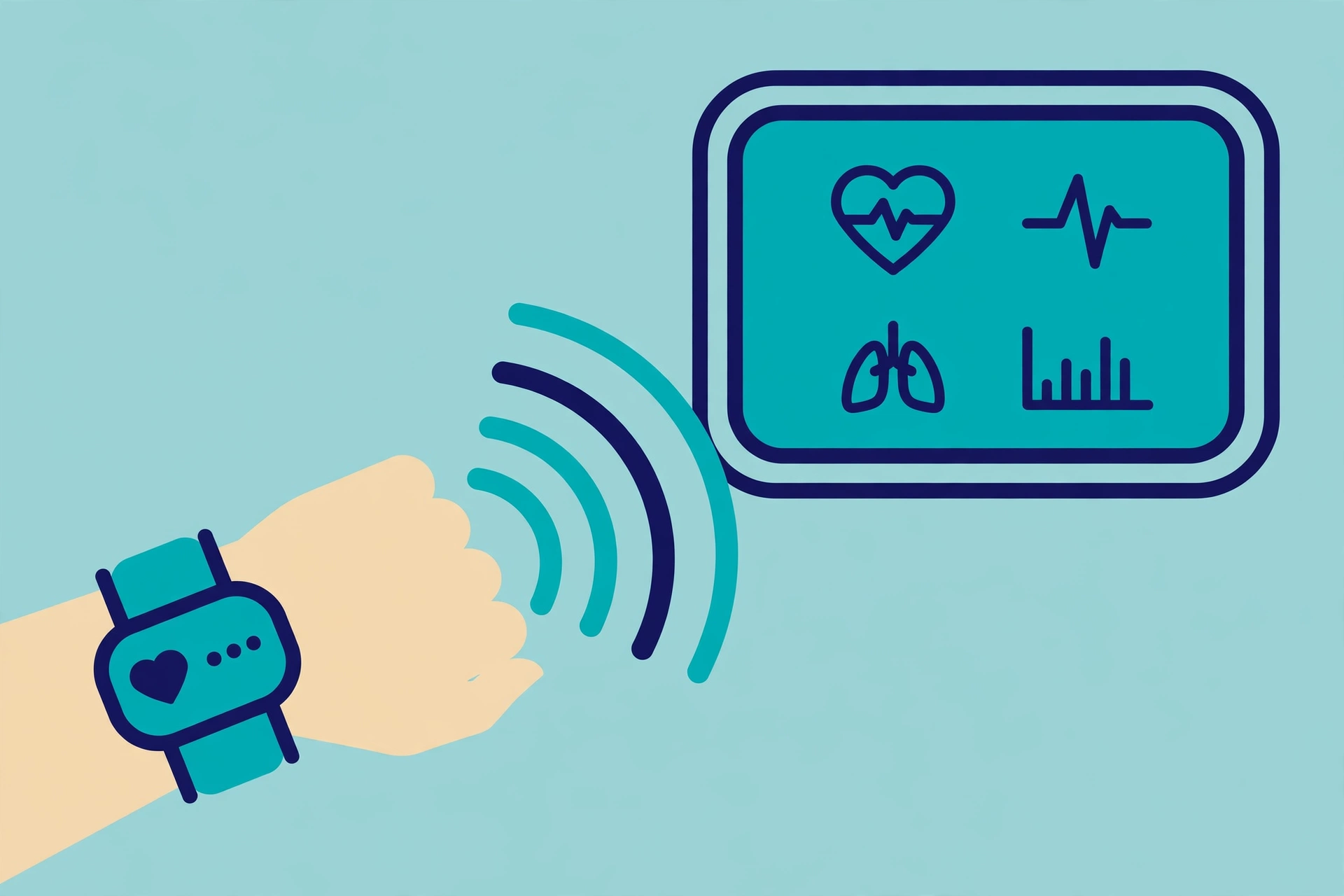
Direct answer: Remote patient monitoring, or RPM, is billed with a small family of CPT codes that cover three things: setting the patient up on a device, supplying the device and receiving its data, and the clinical time spent acting on that data. CPT 99453 covers the initial setup and patient education, reported once per episode of care. CPT 99454 covers device supply with daily recordings or programmed alert transmission, reported once per 30 days when data is transmitted on at least 16 of those days. CPT 99457 covers the first 20 minutes of treatment management in a calendar month, and CPT 99458 covers each additional 20 minutes. Two new codes joined the family in 2026: CPT 99445 for device supply when data is transmitted on 2 to 15 days in a 30-day period, and CPT 99470 for the first 10 minutes of treatment management in a calendar month. The two clocks matter more than the code list: device supply runs on 30-day periods counted in days of data, while treatment management runs on calendar months counted in minutes of documented time.
The Code Family at a Glance
Learn the family before billing any single code, because the codes work as pairs and the wrong pair is the most common RPM billing error.
| CPT code | What it covers | Threshold | How often |
|---|---|---|---|
| 99453 | Initial setup and patient education on use of the device | Once per episode of care, not per device and not monthly | Once per episode of care |
| 99454 | Device supply with daily recordings or programmed alert transmission | Data transmitted on at least 16 days in a 30-day period | Once per 30 days |
| 99445, new for 2026 | Device supply with daily recordings or programmed alert transmission | Data transmitted on 2 to 15 days in a 30-day period | Once per 30 days |
| 99457 | Treatment management, first 20 minutes in a calendar month | At least 20 minutes of management time, including at least one real-time interactive communication with the patient or caregiver | Once per calendar month |
| 99470, new for 2026 | Treatment management, first 10 minutes in a calendar month | 10 to 19 minutes of management time, including at least one real-time interactive communication | Once per calendar month |
| 99458 | Treatment management, each additional 20 minutes | Each additional full 20-minute block beyond 99457 | Per additional block, per calendar month |
| 99091 | Collection and interpretation of physiologic data by the physician or other qualified health care professional | At least 30 minutes in a 30-day period | Separate reporting path, see below |
The 16-Day Rule, Then the Time Rule
The 16-day rule decides the device supply code. Count the days in the 30-day period on which the device actually transmitted data, not the days the patient was enrolled and not the days the device was switched on. If the count reaches 16 or more days, report 99454. If the count is 2 to 15 days, report the new 2026 code 99445 instead. Report only one device supply code per patient per 30-day period: 99445 and 99454 are mutually exclusive, so they are never billed together for the same patient in the same period. One unit is reported per 30-day period regardless of how many devices the patient uses, and 99453 is reported once per episode of care even if the patient uses more than one device. Before 2026, a month with fewer than 16 days of data simply had no billable device supply code, which is the gap 99445 was created to close.
The time rule decides the treatment management code, and it runs on a different clock: the calendar month. Add up the treatment management time across the whole calendar month, including time spent reviewing the transmitted data, communicating with the patient or caregiver, and adjusting the care plan. If the month totals 20 minutes or more, report 99457 for the first 20 minutes and 99458 for each additional full 20-minute block. If the month totals 10 to 19 minutes, report the new 2026 code 99470 instead. Report only one first-increment code per patient per calendar month: 99470 and 99457 are mutually exclusive, so they are never billed together for the same patient in the same month. A device supply code and a treatment management code can be reported in the same period, because they pay for different things, but the day count and the minute count must each be met on their own. Keep the two clocks separate in tracking: a 30-day device period and a calendar month do not start and end on the same dates.
Worked Example, Two Illustrative Months
Every day count and minute count in this example is illustrative, and no payment amounts are shown because rates vary by locality and by payer. In month one, an illustrative patient transmits blood pressure readings on 18 of the 30 days, and the practice logs 35 minutes of treatment management time in the calendar month, including one live phone call with the patient. The day count of 18 meets the 16-day rule, so the device supply code is 99454, reported once. The time count of 35 minutes meets the 20-minute threshold, so the treatment management code is 99457 for the first 20 minutes. The remaining 15 minutes do not complete another full 20-minute block, so 99458 is not reported that month. In month two, the same illustrative patient transmits readings on 9 of the 30 days, and the practice logs 12 minutes of treatment management time, including one live phone call. The day count of 9 falls in the 2 to 15 day window, so the device supply code is the new 99445, not 99454. The time count of 12 minutes falls in the 10 to 19 minute window, so the treatment management code is the new 99470, not 99457. Before 2026, month two would have produced no billable device supply code and no billable management code at all, which is exactly the change the new codes make. Notice what did not change between the two months: the interactive communication was still required, the data still had to be transmitted by the device, and the time still had to be documented minute by minute.
The Requirements Before the First Claim
The codes are only billable when the underlying service meets the program requirements, so check these before the first claim goes out. The patient must be an established patient of the practice, with an existing relationship, and the monitoring must be ordered by the treating physician or other qualified health care professional, with a documented care plan. The device must be a medical device as defined by the Food and Drug Administration, and the data must be recorded and transmitted automatically by the device: readings the patient types in by hand, or logs the patient uploads manually, do not count as transmitted device data. The patient, or caregiver, must consent to the monitoring, and that consent must be documented before the monitoring starts. The monitoring must be medically necessary for the patient condition being managed, and the data must be reviewed and acted on, not merely collected. Treatment management time under 99457, 99458 and 99470 may be furnished by clinical staff under the general supervision of the billing practitioner, but the billing practitioner remains responsible for the service, and the time log must show who did the work. Check the current CMS guidance and the payer policy before billing, because commercial payer rules differ from Medicare rules and change over time.
What Changed in 2026: CPT 99445 and CPT 99470
The two new codes were created by the CPT Editorial Panel and adopted by CMS in the CY 2026 Physician Fee Schedule final rule, effective January 1, 2026. CPT 99445 covers device supply and data transmission for 2 to 15 days in a 30-day period, and it is valued the same as 99454, because the device is supplied for the full 30-day period whatever the number of days it transmits. CPT 99470 covers the first 10 minutes of treatment management in a calendar month, for months with 10 to 19 minutes of management time, and it requires the same interactive communication as 99457. Both pairs are mutually exclusive: report 99445 or 99454, never both, and report 99470 or 99457, never both, for the same patient in the same period. Two cautions travel with the new codes. First, payment figures published in late 2025 may be out of date, because CMS updated practice expense values for these codes in a March 2026 correction notice, so check the current rates on the CMS Physician Fee Schedule look-up tool for your locality rather than relying on a published figure. Second, commercial payers may not recognize the new codes yet, because payer systems update on their own schedule, so confirm how each payer has loaded 99445 and 99470 before billing them. One more point to confirm in the current codebook: some 2026 guides report a lower day threshold for 99453 setup than older guidance did, so check the current descriptor for 99453 in the 2026 CPT codebook before billing it, rather than relying on the older 16-day description.
The Audit Point: The 99457 Time Log
If an auditor reviews an RPM program, the 99457 time log is usually the first file they open, because it is the code where documentation most often falls short. The log must show the date, the number of minutes, who performed the work, and what was done, with the minutes adding up to at least 20 across the calendar month. The interactive communication is the part most often missing: at least one real-time interactive communication with the patient or caregiver during the month is required for 99457, 99458 and 99470, and it must be a live conversation, by phone or video. Text messages alone, voicemail alone, portal messages alone, and passive review of the data with no patient contact do not meet the interactive communication requirement. The day count is the second audit point: the count must come from days on which data was actually transmitted, with the transmission record to prove it, not from days the patient was enrolled. The third audit point is double billing: RPM and remote therapeutic monitoring, or RTM, cannot be billed for the same patient in the same month, and the mutually exclusive code pairs, 99445 with 99454 and 99470 with 99457, cannot be billed together. CPT 99091, the physician data collection and interpretation code, is a separate reporting path from the 99453 to 99458 family, so check the current CPT guidance before reporting it alongside RPM codes in the same period.
Common Mistakes That Deny RPM Claims
The most common mistake is billing 99454 for a month with fewer than 16 days of transmitted data, which is now a 99445 month instead. The second is billing 99457 with no documented interactive communication, or with only text messages to show for it. The third is counting enrolled days or scheduled days instead of days of actual transmitted data. The fourth is billing 99453 every month, when it is a once-per-episode code. The fifth is billing both codes in a mutually exclusive pair, 99445 with 99454 or 99470 with 99457, for the same patient in the same period. The sixth is billing RPM and RTM for the same patient in the same month. The seventh is using manually entered readings or patient-uploaded logs as transmitted device data. The eighth is starting monitoring before consent is documented. The ninth is billing the new 2026 codes to a commercial payer that has not loaded them yet, and then appealing a denial that a payer-policy check would have prevented. The tenth is a time log with a monthly total and no detail behind it: a total with no dates, no minutes per session, and no record of who did the work cannot be defended in an audit.
Checklist
- Confirm the patient is established and the monitoring is ordered by the treating practitioner, with a documented care plan.
- Confirm the device is an FDA-defined medical device that transmits data automatically.
- Document patient consent before monitoring starts.
- Count transmitted-data days in the 30-day period, then choose 99454 for 16 or more days or 99445 for 2 to 15 days, and never bill both.
- Add up treatment management minutes across the calendar month, then choose 99457 for 20 minutes or more, 99470 for 10 to 19 minutes, and 99458 for each additional full 20-minute block, and never bill 99470 with 99457.
- Record at least one real-time interactive communication with the patient or caregiver during the month, by phone or video, and do not rely on text messages alone.
- Log every management session with date, minutes, who did the work, and what was done.
- Report 99453 once per episode of care, and confirm its current descriptor in the 2026 CPT codebook.
- Check that RPM and RTM are not billed for the same patient in the same month.
- Confirm the payer has loaded 99445 and 99470 before billing them, and check current rates on the CMS Physician Fee Schedule look-up tool for your locality.
- Keep the transmission record and the time log with the claim file.
Frequently Asked Questions
What are the CPT codes for remote patient monitoring billing?
The family is 99453 for setup and patient education, 99454 for device supply with 16 or more days of data in a 30-day period, 99457 for the first 20 minutes of treatment management in a calendar month, and 99458 for each additional 20 minutes, plus the new 2026 codes 99445 for 2 to 15 days of data and 99470 for the first 10 minutes of management.
What is the 16-day rule in RPM billing?
Data must be transmitted on at least 16 days in a 30-day period to bill 99454. From 2026, a month with 2 to 15 days of transmitted data is billed under the new code 99445 instead.
Can 99445 and 99454 be billed together?
No. They are mutually exclusive for the same patient in the same 30-day period, so report one or the other based on the day count.
Can 99470 and 99457 be billed together?
No. They are mutually exclusive for the same patient in the same calendar month, so report one or the other based on the minutes of management time.
How many minutes are needed for CPT 99457?
At least 20 minutes of treatment management time in the calendar month, including at least one real-time interactive communication with the patient or caregiver.
What counts as interactive communication for RPM?
A live conversation by phone or video. Text messages alone, voicemail alone, and portal messages alone do not meet the requirement.
How often can CPT 99453 be billed?
Once per episode of care, not monthly and not per device.
What is CPT 99458 for?
Each additional 20 minutes of treatment management beyond the first 20 minutes covered by 99457, in the same calendar month.
Does the patient have to enter readings manually?
No. The device must record and transmit the data automatically; manually entered readings do not count as transmitted device data.
Can RPM and RTM be billed for the same patient in the same month?
No. RPM and remote therapeutic monitoring cannot be billed for the same patient in the same month.
Do commercial payers accept the new 2026 codes 99445 and 99470?
Not necessarily yet. Payer systems update on their own schedule, so confirm how each payer has loaded the new codes before billing them.
What is CPT 99091?
Collection and interpretation of physiologic data by the physician or other qualified health care professional, requiring at least 30 minutes in a 30-day period. It is a separate reporting path from the 99453 to 99458 family, so check the current CPT guidance before reporting it alongside RPM codes.
A note on codes and coverage: This article is educational information about medical billing codes, not legal, financial or compliance advice. CPT codes, CMS rules and payer policies vary by payer and locality and change over time, so always verify the current code descriptors, the current CMS Physician Fee Schedule, and the payer policy before billing. The 2026 codes in this article carry the attribution given with them, and the worked example uses illustrative day and minute counts only, with no payment amounts shown.
Having trouble with RPM denials, missing interactive communication, or months that fall short of the 16-day rule? Neximed Billing provides remote patient monitoring billing support, denial management and documentation workflow help. Contact us at info@neximedbilling.com or +1-406-2251570.
Related reading: Incident-to Billing: Medicare Requirements · Telehealth Place of Service: POS 02 vs POS 10 · Place of Service Codes 19, 21, 23, 24, 31 and 32 · What Is a Fee Schedule in Medical Billing · How to Enroll in Medicare PECOS · Claim Denial Codes: Complete Guide