Transitional Care Management Billing: The Three Clocks Behind CPT 99495 and 99496
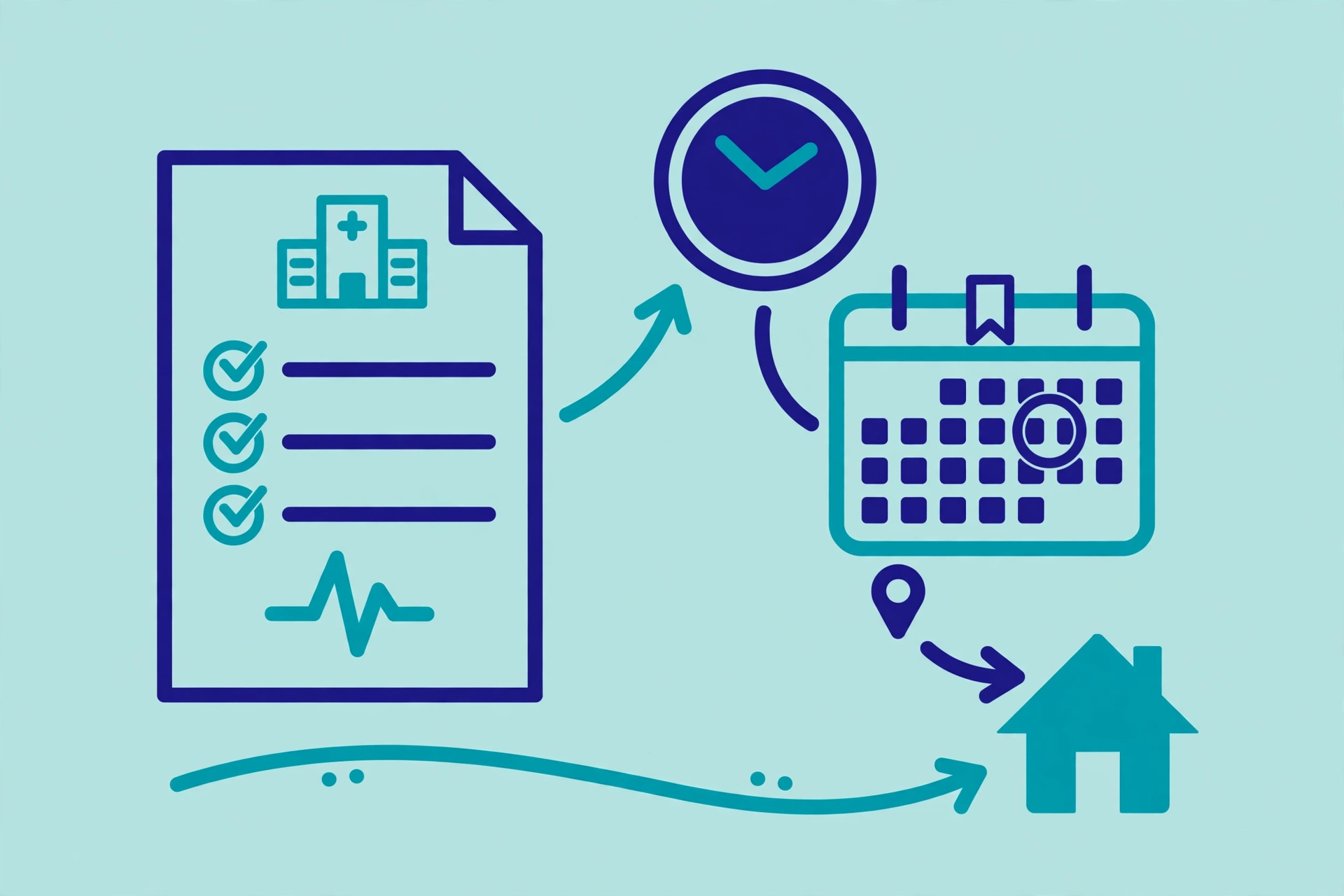
Direct answer: Transitional care management, or TCM, pays the practice for the coordination work that follows a qualifying discharge: contacting the patient quickly, reconciling medications, and seeing the patient face to face while the discharge plan is still fresh. Medicare has paid for TCM since January 1, 2013 under the Physician Fee Schedule, using two codes. CPT 99495 covers TCM with medical decision making of at least moderate complexity and a face-to-face visit within 14 calendar days of discharge. CPT 99496 covers TCM with high-complexity medical decision making and a face-to-face visit within 7 calendar days of discharge. Both codes require interactive contact with the patient or caregiver within 2 business days of discharge, medication reconciliation no later than the date of the face-to-face visit, and a 30-day service period that starts on the day of discharge and continues for the next 29 days. Only one practitioner may bill TCM for a patient in that period, only once, and the date of service on the claim is the date of the face-to-face visit. The code follows the visit that actually happened, not the complexity the patient carried on paper.
The Three Clocks at a Glance
TCM is won or lost on the calendar. A perfect visit billed one day late pays nothing, and a high-complexity patient seen one day past the 7-day window is a 99495, not a 99496. Keep all three clocks visible for every discharge.
| Clock | CPT 99495 | CPT 99496 |
|---|---|---|
| Interactive contact | Within 2 business days of discharge | Within 2 business days of discharge |
| Medical decision making | At least moderate complexity during the service period | High complexity during the service period |
| Face-to-face visit | Within 14 calendar days of discharge | Within 7 calendar days of discharge |
| Service period | Discharge day plus the next 29 days | Discharge day plus the next 29 days |
| Date of service | Date of the face-to-face visit | Date of the face-to-face visit |
| How often it can be billed | Once per patient per 30-day period, by one practitioner | Once per patient per 30-day period, by one practitioner |
Clock One: The 2-Business-Day Interactive Contact
This is the clock where TCM claims are most often won or lost, because it starts running before the practice may even know the patient has left the facility. The contact must be interactive, with the patient or caregiver, by direct contact, telephone, or electronic means, and it must happen within 2 business days of discharge. Business days are Monday to Friday except holidays, and the discharge day itself does not count. The clock runs from the discharge date, not from the day the practice learns about the discharge, so a discharge feed or a daily hospital census check is what makes this clock manageable. The contact may be made by the billing practitioner or by clinical staff under the direction of that practitioner, and the person making the contact must be able to deal with the patient status and needs beyond scheduling, so a call that only books the visit does not count. A voicemail left with no response is not an interactive contact either, because there was no exchange. What counts is a real exchange about the discharge: how the patient is doing, whether the discharge instructions are understood, whether medications are in hand, and what problems need follow-up before the visit. Document the date, the method, who made the contact, and what was discussed, because an undocumented contact is a denied contact. There is one narrow exception to the contact rule, and it is worth knowing exactly: the CPT coding tip for these codes states that if two or more separate attempts are made in a timely manner but are unsuccessful, and the other TCM criteria are met, the service may still be reported. The CMS guidance adds that attempts should continue after the first two until they are successful. So document every attempt with its date and method, keep trying, and check your Medicare Administrative Contractor policy before relying on the exception, because the exception covers documented failed attempts, not a missed deadline with no attempts at all.
Clock Two: The Visit Deadline, 7 Days or 14 Days
The face-to-face visit is the second clock, and it is counted in calendar days, not business days, including weekends. For 99496 the visit must happen within 7 calendar days of discharge with high-complexity medical decision making. For 99495 the visit must happen within 14 calendar days of discharge with at least moderate-complexity medical decision making. The visit deadline and the complexity level must both match the code billed: a short visit window does not establish high complexity, and high complexity does not extend a missed visit window. The visit is bundled into the TCM payment, so do not bill it separately as an office visit. The one exception is a distinct, medically necessary problem unrelated to the visit that is addressed on the same date, which is reported with a separate evaluation and management code and modifier 25. The visit may take place in the office, at the patient home, or through telehealth, subject to Medicare telehealth rules, and the visit may not take place on the same day discharge day management services are reported. The visit is furnished by the physician or qualifying nonphysician practitioner, such as a nurse practitioner, physician assistant, clinical nurse specialist, or certified nurse midwife, who assumes the post-discharge care of the patient. Submit the claim only after the visit is complete, because the date of service is the visit date, not the discharge date or the contact date.
Clock Three: The 30-Day Period, Discharge Day Plus 29 Days
The service period starts on the day of discharge and continues for the next 29 days, a total of 30 days. TCM is billed once per patient in that period, by one practitioner only, so if two practices both furnish TCM for the same patient over the same period, only one claim is paid. The non-face-to-face coordination work, the review of discharge information, the contact with other health care professionals, the medication management, and the follow-up of pending test results, all sit inside this period. If the patient is readmitted during the 30-day period, do not bill two TCM claims for the same period: a new period starts from the second discharge, and the face-to-face visit from the first period is billed as an evaluation and management service instead. The period does not extend the visit deadlines, and the visit deadlines do not extend the period. When the 30 days end, the TCM episode ends with them.
Who Qualifies and Who Does Not
Not every discharge triggers TCM. The patient must be discharged from a qualifying setting and return to a community setting, and the patient medical or psychosocial problems must require moderate- or high-complexity medical decision making during the service period. Qualifying discharge settings include an inpatient acute care hospital, an inpatient psychiatric hospital, a skilled nursing facility, a long-term care hospital, an inpatient rehabilitation facility, hospital outpatient observation, and partial hospitalization. The community setting the patient returns to includes home, a domiciliary, a rest home, and assisted living. Observation status discharges qualify. Emergency department visits without an admission do not qualify, and neither does a transfer directly to another inpatient facility. Always confirm the discharge summary shows the correct facility type before coding TCM, because the wrong setting is a common audit trigger.
Medication Reconciliation by the Visit
Medication reconciliation and management must be furnished no later than the date of the face-to-face visit. That means the discharge medication list has been compared against what the patient is actually taking, discrepancies have been resolved, and the reconciled list is in the record by the visit date. A reconciliation finished after the visit is a missed requirement, not a late document, so build it into the pre-visit workflow: request the discharge summary and medication list at the contact step, not at the visit.
What You Cannot Bill with TCM
TCM bundles a wide span of post-discharge work into one code, so several familiar codes are off limits during the period. Do not report the required face-to-face visit separately. Do not report TCM with G0181 for home health care plan oversight or G0182 for hospice care plan oversight, because those services duplicate TCM. Do not bill TCM for services inside a post-operative global period. Do not count the same minutes toward chronic care management and TCM, and do not bill chronic care management for care-coordination time inside the TCM service period. Whether chronic care management can also be billed in the same calendar month as TCM is handled differently across payer edits and current CMS care management guidance, so check the current guidance and your payer policy before billing both for the same patient, and never double-count the same work under two codes.
Worked Example, the Day-8 Patient
A patient is discharged from an inpatient stay on Day 0 and returns home. The practice makes interactive contact with the patient on the first business day after discharge, covering symptoms, medications, and the follow-up plan, and documents the date, method, and substance. The patient is seen face to face on Day 8, and the record supports high-complexity medical decision making. Medication reconciliation is completed on the visit date. The 30-day period runs from Day 0 through Day 29. The correct code is 99495, not 99496, because the visit happened on Day 8, one day past the 7-day window for 99496, even though the complexity was high. The date of service is the Day 8 visit date, and the claim is submitted after the visit is complete. If the same patient had been seen on Day 7 with the same high-complexity record, the code would have been 99496. That one day is the difference between the two codes, which is why high-risk patients should be booked into the first week before they leave the hospital. On approximate 2026 national non-facility averages published by billing references, about 220 dollars for 99495 and about 298 dollars for 99496, the day-8 visit is worth about 78 dollars less than a day-7 visit, by simple arithmetic on those approximate figures. Those figures are approximate national averages only: the amount actually paid varies by locality, setting, and the annual conversion factor, so check the fee schedule for your locality before budgeting on either figure, and facility rates are lower than non-facility rates.
Common Denials and How They Happen
The most common denial is a missed contact deadline, where the first contact attempt lands on the third business day or is never documented. The second is a visit outside the window, where a high-complexity patient is seen on day 8 or later and billed as 99496 anyway. The third is the wrong complexity level, where the record does not support the medical decision making the code requires. The fourth is a duplicate, where two practitioners bill TCM for the same patient in the same period. The fifth is missing medication reconciliation by the visit date. The sixth is an ineligible discharge, most often an emergency department visit with no admission, coded as TCM. The seventh is billing the face-to-face visit separately, which double-bills work already bundled into TCM. Each of these is preventable at the scheduling desk, not at the appeal desk.
Checklist
- Confirm the discharge came from a qualifying setting and the patient returned to a community setting.
- Start the contact clock on the discharge date, and make interactive contact by the end of the second business day, documenting the date, method, who called, and what was discussed.
- If contact fails, document two or more separate timely attempts and keep trying.
- Book high-complexity patients into the first 7 days and moderate-complexity patients into the first 14 days, counting calendar days.
- Complete medication reconciliation no later than the date of the face-to-face visit.
- Pick the code from the visit that actually happened and the complexity the record supports, remembering a day-8 visit is 99495 even with high complexity.
- Report the visit date as the date of service, and submit the claim only after the visit is complete.
- Do not bill the visit separately, do not bill G0181 or G0182 with TCM, and do not bill TCM inside a post-operative global period.
- Do not double-count time between TCM and chronic care management, and check current CMS guidance and payer policy before billing both in the same month.
- Bill TCM once per patient per 30-day period, by one practitioner only.
Frequently Asked Questions
What is the difference between CPT 99495 and 99496?
CPT 99495 is transitional care management with at least moderate-complexity medical decision making and a face-to-face visit within 14 calendar days of discharge. CPT 99496 requires high-complexity medical decision making and a visit within 7 calendar days of discharge. Both require interactive contact within 2 business days and cover the same 30-day period.
How are business days counted for the 2-business-day contact rule?
Business days are Monday to Friday except holidays, the discharge day does not count, and the contact is due by the end of the second business day after discharge. The clock runs from the discharge date, not from the day the practice learns about the discharge.
What counts as interactive contact for TCM?
A real exchange with the patient or caregiver by direct contact, telephone, or electronic means, about the patient status and needs beyond scheduling, made by the billing practitioner or clinical staff under that practitioner direction. A scheduling-only call or an unanswered voicemail does not count.
What if we cannot reach the patient within 2 business days?
The CPT coding tip states that if two or more separate attempts are made in a timely manner but are unsuccessful, and the other TCM criteria are met, the service may still be reported, and CMS guidance says attempts should continue until successful. Document every attempt and check your Medicare Administrative Contractor policy.
Does an emergency department visit qualify for TCM?
No. An emergency department visit without an admission does not qualify. Observation status discharges do qualify.
When is medication reconciliation due?
No later than the date of the face-to-face visit.
What is the date of service for a TCM claim?
The date of the face-to-face visit. Submit the claim after the visit is complete.
Can the face-to-face visit be billed separately from TCM?
No. The visit is bundled into the TCM payment. A separate evaluation and management code is reported only for a distinct, unrelated problem addressed on the same date, with modifier 25.
Can TCM be billed with chronic care management?
Do not count the same minutes toward both, and do not bill chronic care management for coordination time inside the TCM service period. Whether both can be billed in the same calendar month is handled differently across payer edits and current CMS guidance, so check the current guidance and your payer policy first.
How many times can TCM be billed for one discharge?
Once per patient per 30-day period, by one practitioner only.
Can TCM be billed with G0181 or G0182?
No. Those home health and hospice care plan oversight codes duplicate TCM and cannot be reported with it.
What happens if a high-complexity patient is seen on day 8?
The service is billed as 99495, because the 7-day window for 99496 has closed, even though the complexity was high.
A note on codes and coverage: This article is educational information about billing rules, not legal, financial or compliance advice. CPT codes, Medicare rules, and payer policies change over time and vary by payer, locality, and setting, so always verify the current code descriptions, the CMS Transitional Care Management Services guidance, and your payer and Medicare Administrative Contractor policy before acting. The 2026 payment figures in this article are approximate national averages from published billing references, and the worked example uses a day-count illustration, not a real patient case.
Having trouble with post-discharge claims that deny on timing, or with TCM documentation that does not hold up on review? Neximed Billing provides transitional care management billing support, denial management, and billing workflow support. Contact us at info@neximedbilling.com or +1-406-2251570.
Related reading: Incident-to Billing: Medicare Requirements · Medicare Crossover Claim: Secondary Payer Not Paying · Coordination of Benefits in Medical Billing · Telehealth Place of Service: POS 02 vs POS 10 · Claim Denial Management Workflow · How to Appeal a CO-29 Timely Filing Denial