Corrected Claim vs Appeal: Which One Fixes Your Denied Claim
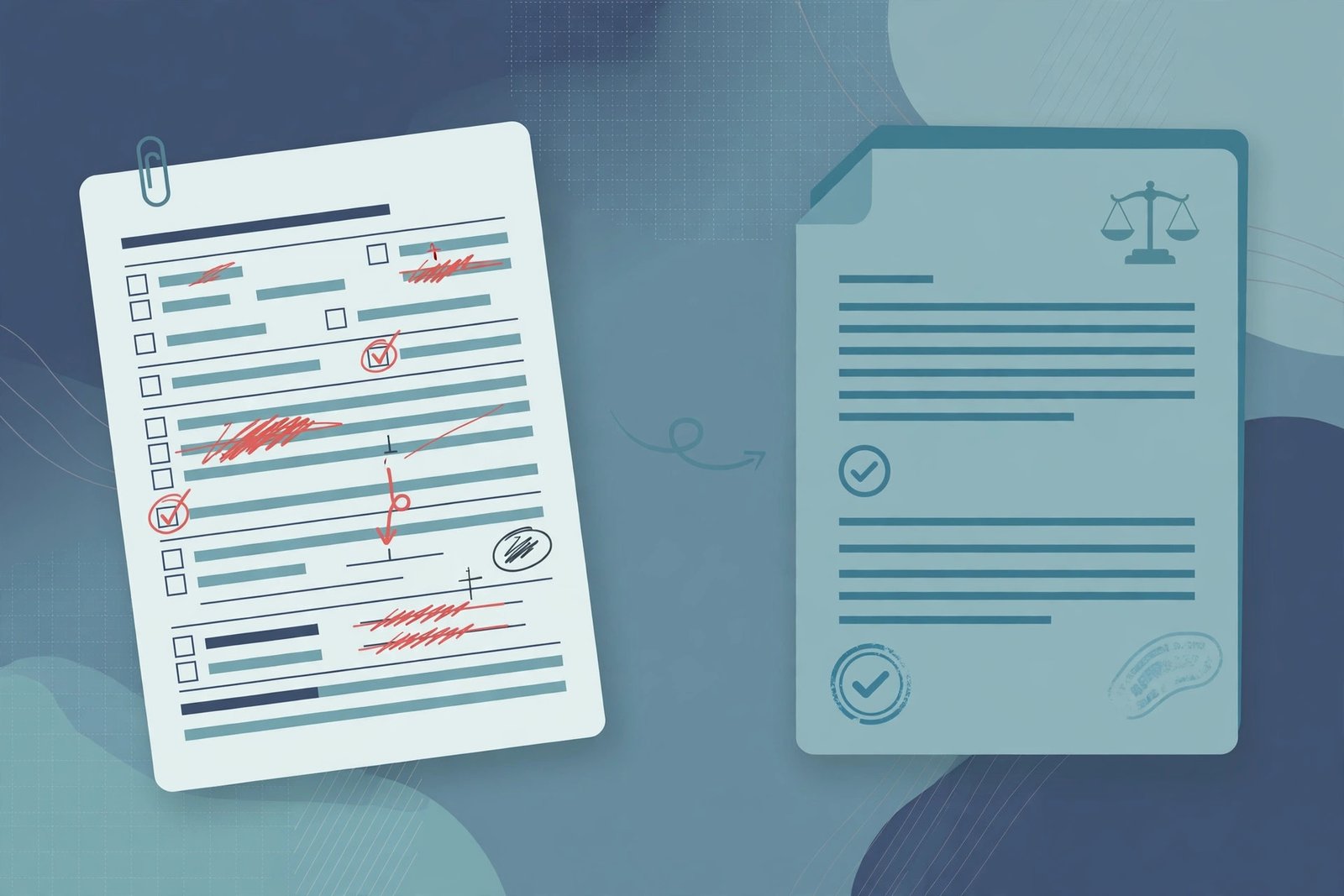
Direct answer: A corrected claim fixes something on the claim itself — a wrong code, a missing modifier, a wrong date, a missing attachment — and resubmits the same claim, corrected. An appeal disputes a payer's decision — medical necessity, a coding interpretation, a coverage call — and asks the payer to reconsider on evidence. Corrected claim: "here is the same claim, now right." Appeal: "your decision was wrong, here is why." Sending the wrong one is the most common reason a fix fails twice: once for the original error, once for the wrong route.
At a Glance
- Corrected claim — fixes: data errors on the claim. Mechanism: same claim, corrected, with frequency code 7 and the original claim reference number where required. Use when: the payer's own error or a claim data error is the problem, and the payer accepts corrected claims for that code.
- Appeal — fixes: a payer decision you dispute. Mechanism: dispute or appeal through the payer's portal or process, with evidence. Use when: the claim data is right, but the payer's decision is wrong, or the corrected-claim window has closed and the payer routes you to a dispute.
How to Decide, in Three Questions
Question 1: Is something on the claim itself wrong or missing? If yes, and the payer accepts corrected claims for that code, start with a corrected claim.
Question 2: Is the claim data right, but the payer's decision wrong? If yes, appeal, with the evidence that supports your position — clinical notes for medical necessity, the payer's own policy for a coverage dispute, the correct code set for a coding dispute.
Question 3: What does this payer require for this code? Payer rules override general rules. Some payers route specific codes to disputes only; some accept corrected claims only within a window; some require a corrected claim before an appeal. Check the payer's provider manual or dispute portal for that code before you submit anything.
Corrected Claim Mechanics
On a CMS-1500, a corrected claim is generally submitted with frequency code 7 and the original claim control or reference number in Box 22, where the payer requires it. On an 837 electronic claim, the equivalent is the frequency code and the original reference in the claim loop. The point of both is the same: link the correction to the original claim, so the payer replaces it instead of processing a second, duplicate claim. Never resubmit a denied claim as a brand-new original claim when a corrected claim is required — that is how a simple data fix becomes a duplicate denial, which is harder to clear than the first. Always confirm the payer's corrected-claim format, because some payers require a specific portal, form, or frequency code variation.
Appeal Mechanics
A strong appeal is short, specific, and evidence-led. State the claim, the date of service, and the denial code. State the payer's decision in one sentence. State your position in one sentence, with the evidence that supports it. Attach only the evidence that supports that position — the relevant note, the relevant policy section, the relevant code reference — not the entire chart. Request a specific outcome: reconsider and pay, or reprocess at the correct rate. And diary a follow-up date.
When Both Are Needed, in Order
Some claims need both routes, in sequence. Correct the data error first, so the claim is adjudicable, then appeal the decision that remains if the payer still denies it. Reversing the order — appealing a claim that still contains a data error — usually produces a denial upheld for a reason you never addressed. Work the claim in order: data first, decision second.
When to Write Off Instead
Not every denied claim is worth a corrected claim or an appeal. If the amount is small, the evidence is weak, the window has closed, and the payer's rules leave no route, a documented write-off with a reason code is better than a third resubmission that will also fail. Write-offs should be a decision, recorded with a reason, not a default for claims nobody worked. Review write-off patterns monthly: a pattern of the same code being written off is a workflow problem, not a payer problem.
Corrected Claim vs Appeal Checklist
- Denial code read in full, CARC plus RARC.
- Decision made: corrected claim, appeal, or write-off, with the payer rule noted.
- Corrected claim, if chosen: frequency code 7 and original reference number included, format confirmed for that payer.
- Appeal, if chosen: position stated in one sentence, evidence attached by number, specific outcome requested.
- Submitted through the correct channel, not as a new original claim.
- Follow-up date set, and the claim tracked until paid, finally denied, or written off with a reason.
Frequently Asked Questions
What is a corrected claim?
A resubmission of the same claim with a data error fixed, linked to the original claim by frequency code and reference number.
What is an appeal?
A dispute of a payer's decision, asking the payer to reconsider on evidence.
Can I send both at once?
Generally no — work in order: correct the data first, then appeal any decision that remains.
What happens if I resubmit a denied claim as a new claim?
It commonly creates a duplicate denial, because the payer already has an adjudicated claim for that service.
How long do I have?
That depends on the payer: corrected-claim windows and appeal windows differ by payer and by code, so check the contract and the payer's manual for that claim, and diary the earliest applicable date.
What if the payer's portal offers only one route?
Follow the payer's route for that code, and record that you did — payer-specific routing overrides general guidance.
A note on codes and forms: CARC descriptions and CMS-1500 field references are summarised from the official X12 code lists and common payer usage. Always confirm a code and a payer's corrected-claim format against the official lists and the payer's own companion guide before acting. This article is educational information about billing workflows, not legal or compliance advice.
Need help working denials in the right order? Neximed Billing provides denial management, corrected-claim submission, and A/R follow-up. Contact us at info@neximedbilling.com or +1-406-2251570.